AI Is a Toddler in a Trench Coat Pretending to Be a Genius
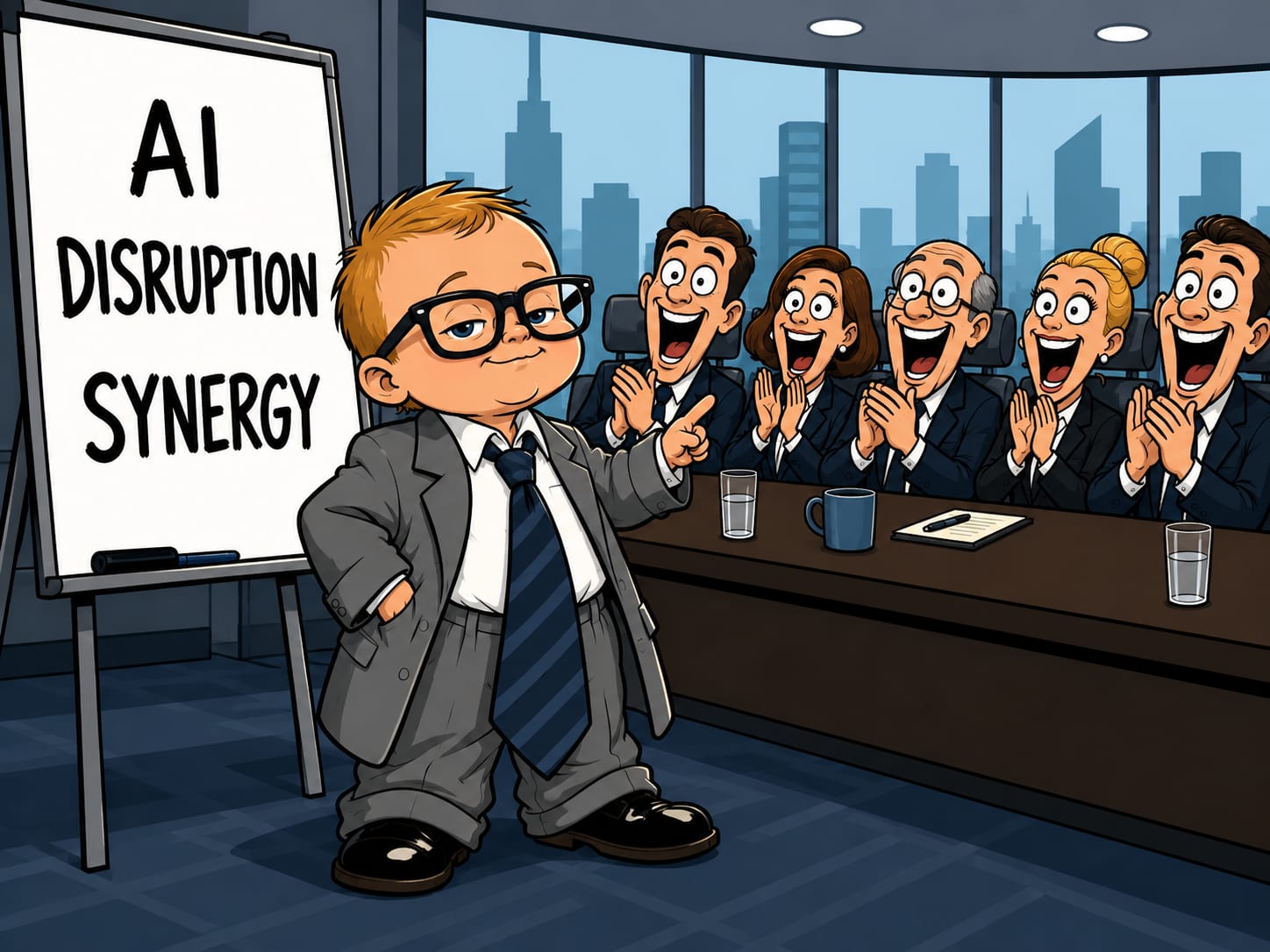
I reckon we’re bloody lazy calling LLMs “AI”. There is literally nothing intelligent about an LLM. ChatGPT, Claude, Gemini, Grok, Kimi, Ollama: they’re all just compressed files of the world’s existing data with an algorithm interface slapped in front that accesses that data and tries to make sense of it, based on your prompt. There’s nothing intelligent in that design, mate. It’s Google spitting out results as a conversation instead of a list of websites. Same snags, different bread.
Merriam Webster defines intelligence as: “the ability to learn or understand things or to deal with new or difficult situations.” Which is to reason. LLMs don’t reason. They predict the next word with about as much thought as a pokie machine gives your retirement fund.
Here’s the single answer to why what tech and media have flogged to us as “AI” is the biggest porky ever told: LLMs have bugger-all memory. How do you learn if you can’t remember what you learnt? How can you understand without memory? Memory is the single biggest thing stopping LLMs from becoming intelligent. It’s not a missing feature. It’s the entire engine missing from the car.
The world embraced them, companies threw money at them like a drunk uncle at the TAB, and a year later many are quietly undoing most of what they did, desperately trying to survive and claw back some of the losses AI caused them, while still trying to find a use for their investment. AI isn’t that great at being a help desk. It’s okay, but it’s not human level. It solves nothing beyond a few basic answers it’s been handed and told to parrot under certain circumstances. No reasoning. No understanding. Just a very confident parrot in a Patagonia vest.
Investors have punted trillions into the AI market, and most are bleeding money. AI hasn’t delivered the return on investment everyone was promised, and that’s purely because it’s not as intelligent as the name on the box says. No long-term memory. But when you’ve got billions and trillions invested, you’ve got to sell it like it’s the best thing since electricity. If it’s not sold that way, companies collapse, and hard-working people lose their super in the stock market.
Don’t get me started on the stock market. That’s just legalised gambling someone decided was a ripper idea, because a small group could get filthy rich while ensuring the rest of us minions get poorer. The GameStop short squeeze proved that argument, definitively. Case closed. Shut the gate.
AI isn’t going to take all the jobs within years like the tech elite theorised. And the media loves a good scare story, doesn’t it? Why won’t it happen? Because AI is still thick as two short planks, masquerading as clever, when in fact it’s a toddler pretending to be a genius.
I like watching YouTube AI content, keeping an eye on what’s going on in the AI sphere. There are some genuinely amazing developments: humanoids, static robots doing engineering tasks, and medical tech helping surgeons with 3D reality, taking scans and using VR goggles to look around inside a person before surgery, to see exactly what they need to do. That’s incredible, and it’s saving lives. BUT, and it’s a big but and I cannot lie, none of that is doing the work itself. It all requires human intervention, human assistance, humans doing the majority of the heavy lifting.
AI in Computing: The Fastest Rise and Faceplant in Tech History
Tech thought AI would solve all their problems. The reality? They poured in millions and billions, and the ROI is flatter than a week-old beer. Actually, scratch that. It’s negative. Elon Musk bought Twitter, rocked in with a sledgehammer, and cut roughly 80% of staff in six months. He made some infrastructure stuff-ups, sure, but he’s also cut that by about 60% over the years. Within a year, the outcome was obvious: Twitter could run with far fewer people than it actually employed. Every tech company on the planet took notes.
What came next was a wave of disguise: companies making massive job cuts under the guise that AI made people redundant. That was the fig leaf. The reality is they also worked out they never needed that many people in the first place. When you employ 30,000 people, cutting 50% is an enormous saving to your bottom line through efficiencies across the company. But you can’t exactly admit you’ve been running a public company like a chook raffle, so… let’s blame AI for taking the jobs. Beautiful. No notes.
Where AI Actually Shines (Fair’s Fair)
Now, if you need AI to design a website, it’s better than a human, faster than a human, and well, web designers probably need to transition. Same goes for graphic and video designers. AI does both better and faster. It excels in short-form design and implementation. The movie industry will be decimated by AI. It can write and create better than most humans can. Not all, not in every case, but the impact will be devastating. Go watch an AI music video on YouTube. Written, composed, and shot entirely by AI, and it’s bloody good. It’ll only get better with time.
Now you’re thinking, “So it IS going to take all the tech jobs?” Nope. Not unless they solve long-term memory. Music is minutes. Movies are seconds and minutes stitched together into a storyline. Websites are ten pages or fewer. All short-form, all easy, and AI absolutely smashes short-form content. But give it a 90-minute movie to create and it falls apart like a Bunnings sausage in the rain. Give it a full program to build and it face-plants. Why? No long-term memory. It doesn’t remember what it did an hour ago while writing the program, nor the start of the movie it was creating, because its memory capacity carked it and now it only stores the last three minutes of data.
“But we’ve got memory files!” Sure, Jan. That’s a nice band-aid on a severed limb, but when it can’t remember to open the memory file, it just runs off and does its own thing. And when it writes the memory file (the one it chooses whether or not to read), it’s full of errors and inaccuracies. Genius. Absolute genius.
When they solve memory, AI might actually start becoming intelligent, and stop being a toddler masquerading as a teenager.